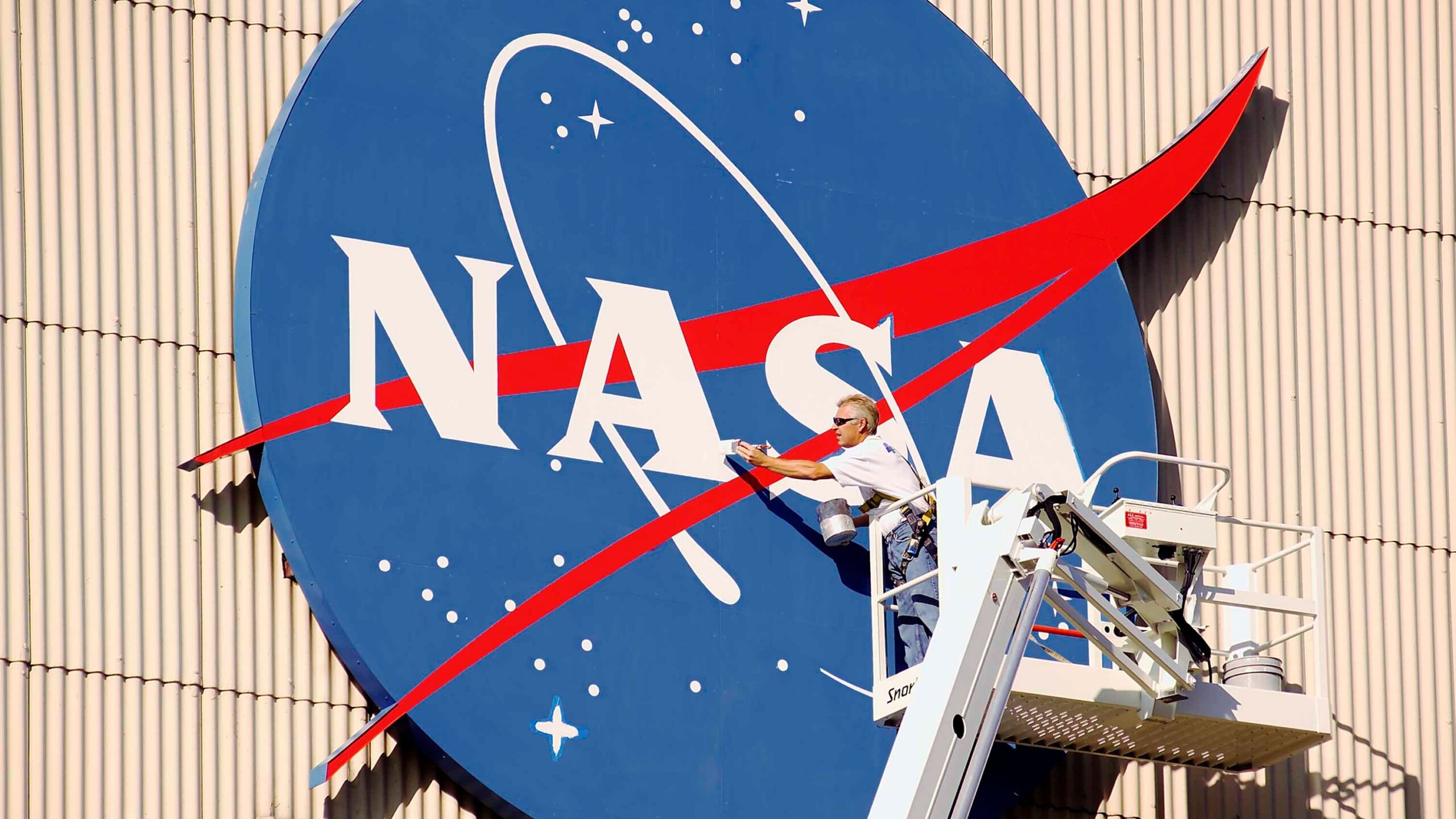
Humanity’s innate drive to explore has always pushed us beyond the confines of our world. Today, that exploration is meticulously planned, executed, and analyzed within extraordinary facilities that are the very epicenters of cosmic discovery. These space research centers are not just buildings; they are crucibles of innovation, where brilliant minds collaborate to unravel the universe’s deepest secrets, push the boundaries of technology, and pave the way for future generations to journey among the stars. From developing cutting-edge spacecraft to deciphering signals from the furthest reaches of the cosmos, these institutions are truly shaping our understanding of the universe and our place within it.
At Celestogenesis, we believe in highlighting the pioneers of progress. We’ve delved into the global landscape of space exploration to identify the top 6 space research centers, based on their significant contributions to astrophysics, planetary science, astronaut training, and the sheer scale of their impact on humanity’s cosmic endeavors. Join us as we journey through these incredible hubs of scientific excellence.
Why are Space Research Centers Important?
Space research centers are fundamentally important because they tirelessly advance scientific understanding of the universe, pushing the boundaries of our knowledge about stars, planets, and the cosmos; they act as powerful catalysts for technological innovation, developing groundbreaking solutions for space that frequently “spin-off” into terrestrial applications benefiting daily life and industries; they are essential for addressing global challenges by providing critical data for Earth observation, climate monitoring, and secure global communication; and finally, they serve to inspire future generations towards STEM fields while fostering vital international collaboration for the peaceful exploration of space.
Top 6 Space Research Centres in the World
1. NASA Jet Propulsion Laboratory (JPL)

- Headquarters: Pasadena, California, USA
- Yearly Spending: JPL’s budget is part of NASA’s overall budget, which is typically in the range of $25-30 billion USD annually. A significant portion of NASA’s science mission directorate budget is allocated to JPL for robotic planetary exploration.
- Success Rate: JPL has an exceptionally high success rate for its missions, a testament to rigorous engineering and testing. While no space mission is without risk, JPL is renowned for its reliability and innovative problem-solving, with a strong history of achieving primary mission objectives for high-profile endeavors like the Mars rovers and Voyager probes.
The name JPL is synonymous with robotic space exploration. Operated by Caltech for NASA, this legendary center is responsible for designing, building, and operating a vast array of robotic spacecraft and rovers that have explored every planet in our solar system, and beyond. From the Mars rovers (Curiosity, Perseverance) to the Voyager probes (our farthest-traveling emissaries) and the recent Europa Clipper mission, JPL consistently delivers groundbreaking missions that redefine our understanding of planetary science. Their expertise in deep-space communication, complex mission operations, and instrument development makes them an undisputed leader in interstellar and interplanetary research.
2. European Space Agency (ESA) – European Space Research and Technology Centre (ESTEC)

- Headquarters: Noordwijk, Netherlands (ESTEC is the technical heart; ESA Headquarters is in Paris, France).
- Yearly Spending: ESTEC’s funding is integrated into ESA’s overall budget, which averages around €6-7 billion EUR annually. ESTEC, being the largest ESA site, receives a substantial part of the agency’s technical development and testing funds.
- Success Rate: ESA and ESTEC boast a very high success rate for their scientific and technological missions. Their rigorous European standards and extensive testing facilities at ESTEC contribute significantly to the reliability of missions like Rosetta (comet rendezvous), Gaia (mapping the Milky Way), and the contributions to the James Webb Space Telescope.
ESTEC is the technical heart of the European Space Agency, acting as the incubator for most ESA missions and the testing ground for spacecraft, from initial concept to launch. It’s where the most challenging technical and scientific issues of space missions are addressed. ESTEC’s laboratories and test facilities are state-of-the-art, enabling the development and testing of everything from propulsion systems to robotic arms and scientific instruments for missions. This center embodies European excellence in space technology and research collaboration.
3. JAXA Institute of Space and Astronautical Science (ISAS)

- Headquarters: Sagamihara, Kanagawa, Japan (ISAS is a part of JAXA, whose main headquarters are in Tokyo).
- Yearly Spending: ISAS’s budget is part of JAXA’s annual allocation, which typically ranges from ¥150-200 billion JPY (approx. $1-1.3 billion USD). ISAS specifically focuses on scientific research missions.
- Success Rate: ISAS has an impressive track record for its scientific missions, particularly noted for their innovation and ability to achieve complex objectives with relatively smaller probes, such as the Hayabusa asteroid sample return missions. Their success rate for achieving primary scientific goals is very high.
JAXA’s ISAS is Japan’s primary institute for space and planetary science research. It stands out for its focus on scientific satellite missions, often involving smaller, highly focused probes that yield incredible scientific returns. ISAS has a remarkable track record with missions like Hayabusa (asteroid sample return), Akatsuki (Venus orbiter), and the X-ray astronomy satellites (Suzaku, Hitomi). Their innovative approach to mission design, high-precision engineering, and deep scientific analysis has consistently placed them at the forefront of astrophysics and planetary exploration, especially for solar system bodies.
4. Russian Space Research Institute (IKI)

- Headquarters: Moscow, Russia
- Yearly Spending: IKI’s budget is integrated into the funding for the Russian Academy of Sciences and receives specific allocations for Roscosmos projects. Precise separate figures for IKI are not readily available, but Russia’s overall space budget has varied significantly, often in the range of $2-4 billion USD annually, with IKI being a major recipient for fundamental space research.
- Success Rate: IKI has been involved in many pioneering Soviet and Russian space missions. While historical data includes some ambitious missions with partial or mixed success (e.g., some early Mars/Venus landers facing harsh conditions), their scientific instrumentation and data analysis contributions have consistently been vital, and recent collaborations have generally seen good outcomes.
Part of the Russian Academy of Sciences, IKI is Russia’s leading organization for fundamental space research. It has played a pivotal role in numerous historic missions, from early planetary probes to ongoing efforts in astrophysics and solar-terrestrial physics. IKI’s contributions include significant work on Venera (Venus landers), Phobos-Grunt (Mars moon sample return attempt), and various scientific instruments for International Space Station modules. Despite geopolitical shifts, IKI remains a critical player in international collaborations and continues to contribute valuable data and insights into the physics of space and the solar system.
5. Indian Space Research Organisation (ISRO) – U R Rao Satellite Centre (URSC)

- Headquarters: Bengaluru, Karnataka, India
- Yearly Spending: URSC’s funding is part of ISRO’s overall budget, which has seen consistent growth and is typically around ₹12,000 – ₹15,000 crore INR (approx. $1.4 – $1.8 billion USD) annually. URSC is a primary center for satellite development within ISRO.
- Success Rate: ISRO, and by extension URSC, has demonstrated an exceptionally high success rate in satellite launches and mission execution, particularly known for its cost-effectiveness. Missions like Chandrayaan (Lunar orbiters) and Mangalyaan (Mars Orbiter Mission) have achieved their objectives, demonstrating robust engineering and reliable performance.
While ISRO as a whole is a national space agency, the U R Rao Satellite Centre (URSC, formerly ISAC) is its primary center for the design, development, and realization of satellites for communication, navigation, remote sensing, and space science. URSC has been instrumental in India’s rapid strides in space, delivering a series of powerful communication satellites and scientific missions. Its impressive capability to develop complex spacecraft cost-effectively makes it a rising star in global space research, contributing valuable scientific data and technological advancements.
6. Beijing Institute of Spacecraft System Engineering (BISSE)

- Headquarters: Beijing, China (BISSE is part of the China Academy of Space Technology (CAST), which is under CNSA).
- Yearly Spending: BISSE’s budget is integrated into China’s broader space program funding. While China’s overall space budget is not fully transparent, estimates suggest it is a significant and growing figure, potentially in the range of $10-15 billion USD or more annually. BISSE is a core facility for developing China’s spacecraft.
- Success Rate: China’s space program, with BISSE as a key contributor, has a rapidly improving and high success rate in recent years across various mission types, including lunar sample returns (Chang’e), Mars exploration (Tianwen-1), and the construction of its space station (Tiangong). Their methodical approach has led to increasingly successful and complex missions.
These six centers, spanning different continents and specializing in diverse aspects of space research, collectively represent the cutting edge of humanity’s cosmic endeavors. They are not just conducting experiments; they are writing the next chapters of our universal story, inspiring generations, and pushing the boundaries of what is possible beyond Earth. The discoveries made within their walls resonate across the globe, continually expanding our knowledge and igniting our collective imagination for the journey ahead. Which celestial achievement from these centers fascinates you the most?
Also Read: Top 10 Planetariums in the world