Our planet’s celestial ballet around the sun is anything but monotonous. Far from a simple circle, Earth’s orbit, combined with a crucial tilt, orchestrates a spectacular annual drama of light and shadow, heat and cold. This grand performance gives us our seasons, punctuated by two pivotal astronomical events: the summer and winter solstices. These are not merely dates on a calendar, but profound cosmic turning points that have shaped human civilization, agriculture, and celebration for millennia.
What is Summer Solstice and Winter Solstice
The Summer Solstice marks the day when one of Earth’s hemispheres is maximally tilted towards the sun, resulting in the longest period of daylight, while the Winter Solstice occurs when that same hemisphere is maximally tilted away from the sun, leading to the shortest period of daylight.
The Astronomical Heartbeat: Earth’s Unwavering Tilt
At the core of understanding solstices lies Earth’s axial tilt. Our magnificent planet doesn’t spin upright as it journeys through space; instead, its axis is consistently tilted at an angle of approximately 23.5 degrees relative to its orbital plane around the sun. It is this unwavering tilt, not our varying distance from the sun (in fact, the Northern Hemisphere is actually slightly further from the sun during its summer!), that is the sole architect of our seasons.
As Earth completes its elliptical orbit over 365.25 days, this tilt means that different hemispheres receive varying amounts of direct sunlight throughout the year. The solstices mark the two extreme points in this celestial dance:
- Summer Solstice: This occurs when one of Earth’s poles achieves its maximum tilt towards the sun. For the Northern Hemisphere, this happens around June 20th or 21st.
- Winter Solstice: Conversely, this is when one of Earth’s poles reaches its maximum tilt away from the sun. For the Northern Hemisphere, this is around December 21st or 22nd.
The very word “solstice” is derived from the Latin “solstitium,” which translates to “sun stands still” (from sol for sun and sistere for to stand still). This beautifully describes the apparent halt in the sun’s northward or southward movement across the sky before it begins to reverse its celestial path. While the exact moment of a solstice is a precise point in time (for Summer Solstice 2025, it’s 02:42 UTC on June 21st), its effects, particularly the extended daylight or darkness, are felt for several days surrounding this precise instant.
Summer Solstice: A Zenith of Light and Life
For the Northern Hemisphere, the Summer Solstice of Saturday, June 21, 2025, will mark the longest day of the year. On this day, the sun ascends to its highest point in our sky, tracing its longest and highest arc from sunrise to sunset. Its rays strike the Northern Hemisphere most directly, bathing it in abundant daylight and ushering in warm temperatures. For those situated directly on the Tropic of Cancer (which intersects regions like India, Saudi Arabia, and Mexico), the sun will appear directly overhead at local noon.
The experience of this extended daylight varies significantly with latitude:
- Near the Equator (e.g., Thiruvananthapuram, India): The difference in day length compared to other times of the year is noticeable but less dramatic. In New Delhi, for instance, June 21, 2025, will boast approximately 13 hours, 58 minutes, and 11 seconds of daylight.
- Temperate Zones (e.g., Europe, North America): The contrast becomes far more pronounced. Cities like London or New York will bask in well over 15 hours of daylight.
- Above the Arctic Circle: Here, the phenomenon is truly spectacular. The sun remains continuously above the horizon for days, weeks, or even months, creating the surreal “Midnight Sun.” This period of perpetual daylight is a unique feature of high-latitude summers.
It’s an interesting astronomical quirk that while the Summer Solstice brings the most daylight, it’s not typically the warmest day of the year for many mid and high-latitude locations. This is due to “seasonal lag.” Even after the solstice, the Earth’s land and oceans continue to absorb more energy than they release for several weeks, leading to peak temperatures often occurring in July or August.
Winter Solstice: The Deepest Night and the Promise of Rebirth
Six months later, around December 21st (specifically at 15:03 GMT for 2025), the Northern Hemisphere experiences its Winter Solstice. At this moment, our pole is tilted farthest away from the sun. Consequently, the sun’s path across the sky is at its lowest and shortest, resulting in the shortest day and the longest night of the year. This period is characterized by fewer daylight hours, lower sun angles, and often colder temperatures, bringing with it a more introspective and quiet atmosphere.
Just as the Arctic basks in the Midnight Sun during summer, the Antarctic experiences continuous darkness or twilight around its winter solstice (which, for the Southern Hemisphere, occurs in June). For those above the Antarctic Circle, the sun remains below the horizon for extended periods.
However, the Winter Solstice is far from a day of despair. It marks the precise turning point when the days begin to lengthen again, a slow but steady return of light and warmth. This subtle shift has historically imbued the winter solstice with profound significance, symbolizing rebirth, renewal, and the triumph of light over darkness.
A Human Tapestry: Historical and Cultural Significance
For millennia, long before the precision of modern astronomy, humanity was intimately connected to the sun’s rhythm. The solstices, as observable extremes, became powerful markers for agricultural cycles, spiritual beliefs, and communal gatherings.
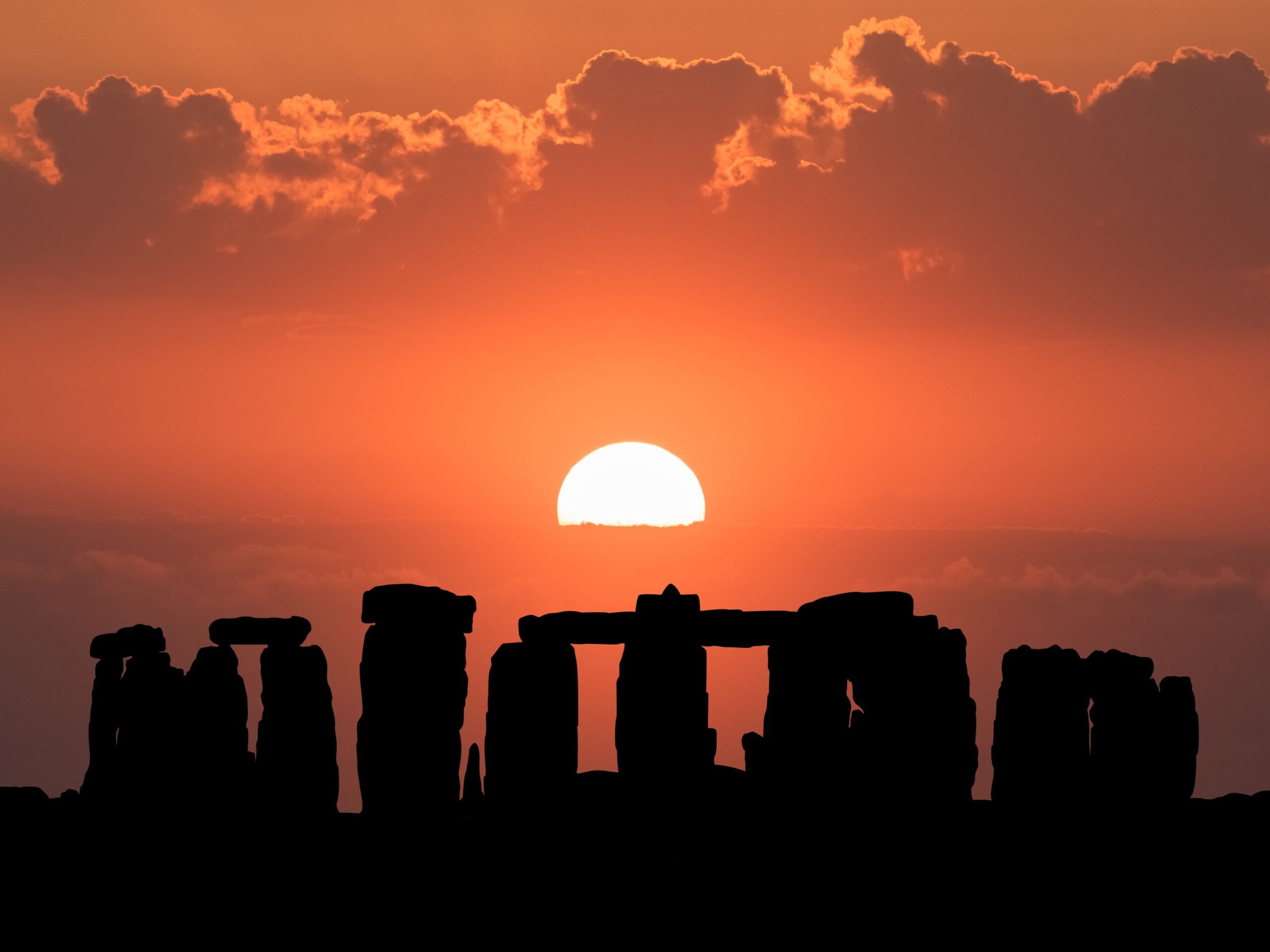
- Ancient Alignments and Sacred Sites: From the Neolithic era onwards, countless ancient monuments were meticulously aligned with the solstices. Stonehenge in England is perhaps the most famous, where the summer solstice sunrise perfectly aligns with the Heel Stone, and the winter solstice sunset also aligns with key elements. Similarly, Newgrange in Ireland is oriented to capture the winter solstice sunrise, illuminating its inner chamber. The Maya and Aztec civilizations in Mesoamerica also built temples and pyramids, such as El Castillo at Chichén Itzá, with alignments that created dramatic shadow plays during the solstices, symbolizing divine descents. These alignments underscore how crucial these celestial events were for ancient peoples, likely serving as calendars, religious sites, or places for communal rituals to ensure fertility and survival.
- Fires of Purification and Renewal: Across Northern and Central Europe, Midsummer (often celebrated around the Summer Solstice) involved lighting massive bonfires. These fires were believed to strengthen the sun’s energy for the harvest, purify the land, ward off evil spirits, and even bring good luck to lovers. In many cultures, the act of jumping over the dying embers of a solstice bonfire was seen as a purification ritual.
- Diverse Global Celebrations:
- In Scandinavia, Midsummer is still a major holiday, celebrated with maypole dances, flower crowns, and feasts, symbolizing fertility and light.
- The Feast of Sant Joan in Catalonia, Spain, sees “Nit del Foc” (Night of Fire) celebrations with bonfires and fireworks.
- For ancient Egyptians, the summer solstice often coincided with the heliacal rising of the star Sirius and the crucial annual flooding of the Nile, a time of rebirth and abundance for their agricultural civilization.
- Many Indigenous American cultures have long held sacred ceremonies around both solstices, such as the Sioux Sun Dance, focused on renewal and spiritual connection.
- The winter solstice was particularly crucial as it marked the lowest point of light, making its reversal a profound moment. Festivals like Yule (Germanic and Norse paganism), involved burning yule logs, decorating with evergreens, and feasting, traditions that profoundly influenced modern Christmas celebrations. The Roman festival of Saturnalia, celebrated near the winter solstice, was a week-long period of feasting, gift-giving, and role reversals.
- In East Asia, the Dongzhi Festival (Winter Solstice Festival) emphasizes family gatherings, special foods (like tangyuan or dumplings), and a recognition of the shortest day passing and longer days returning.
These myriad traditions, regardless of their specific form, share a universal theme: a deep, inherent human desire to connect with the cosmos, to mark the passage of time, and to find hope and meaning in the cyclical dance of light and shadow that governs our world.
Impacts on Nature and Modern Observation
The solstices are not just human affairs; they profoundly impact the natural world:
- Plant Life: The extended daylight of the summer solstice fuels maximum photosynthesis and rapid growth for plants in temperate zones. Conversely, the shortened days of winter trigger dormancy in many species. Interestingly, research indicates that warming temperatures before the summer solstice can actually lead to an earlier onset of autumn leaf senescence (leaf fall), while warming after the solstice might delay it. This highlights how critically trees synchronize their growth with changing day length.
- Animal Behavior: Animal breeding cycles, migration patterns, and foraging behaviors are all influenced by the changing photoperiod (day length) dictated by the solstices. The abundant light of summer supports heightened activity, while the long nights of winter encourage hibernation or reduced activity.
- Human Well-being: For humans, the solstices can impact mood and energy levels. The increased light in summer is often associated with higher energy and better mood, while the reduced light in winter can contribute to seasonal affective disorder (SAD) for some individuals.
In our modern era, while we track the solstices with atomic clock precision, their fundamental importance remains. They serve as a powerful annual reminder of our connection to the universe and the continuous cycles that govern life on Earth. Whether you’re participating in an ancient ceremony, watching a solstice sunrise, or simply savoring an extra hour of daylight, these moments offer a chance to reflect on the grandeur of our planet’s journey and our place within it.